среда, 8 мая 2013 г.

Using the Word “May”


To celebrate the first day of May, we’re going to share some uses of this versatile word with you. (May 1 is known as May Day. You can learn a bit more about May Day here!)
May, the month, was named after the Greek goddess Maia. In Ancient Greek, her name is related to the word for midwife. In the northern hemisphere, May is the month associated with warmer weather and blooming flowers. Did you know? No other month begins or ends on the same day of the week as May within a year. “May” is more than just the name of a month, however.
вторник, 7 мая 2013 г.

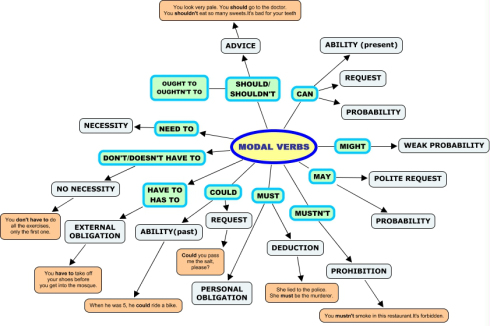
modal verbs map


modal verbs


Kinds of modals
1) Epistemic modalsmay (He may be at home), might (It might get too hot),must (It must be your sister on the phone), ought to (They ought to have heard by now),

stative verbs


 stative verbs

Most verbs express an action: drink; laugh; allow...
Verbs like these are called "dynamic" verbs. However, there are some verbs which don't express an action. They express a state which is not changing. These are known as "stative verbs". Some examples of stative verbs are: be; seem; have; want; smell

Remember, Recall, Remind

Let, Make, Have & Get + Object


Welcome to simple English grammar! No complex explanations - just watch, understand and practice speaking the natural, English Anyone way.

понедельник, 6 мая 2013 г.

Had Better

A lot of students have trouble with had better, so for today’s one point English lesson, I am going to show you how we use had  better. Take a look at the lesson graphic